Material: mammoth ivory
Dimensions (length): 212 mm
Exhibit type: copy of original (plaster)
Archaeological site: Pavlov I (Pavlov near Dolní Věstonice, Moravia)
Collection: Institute of Archaeology of the CAS, Brno v.v.i., Czech Republic
This dynamically conceived carving portrays the animal probably in a crouching position, preparing to leap. Interestingly, when illuminating the rear of the carving from the side, marks depicting the animal’s musculature appear on the surface of the body.
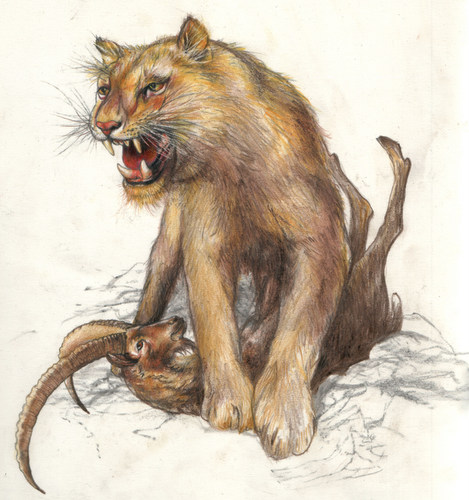
The Eurasian cave lion was the largest feline predator in the landscape of that time, and its lifestyle can be compared to that of today’s Siberian tiger. It did not have the mane or tufted tail typical of the modern lion. Its fur was thick and long. It was also bigger than today’s lions: it grew to a length of 2.1-2.5 m (not including the tail), was roughly 1.2 m at the shoulder and weighed about 250-300 kg.