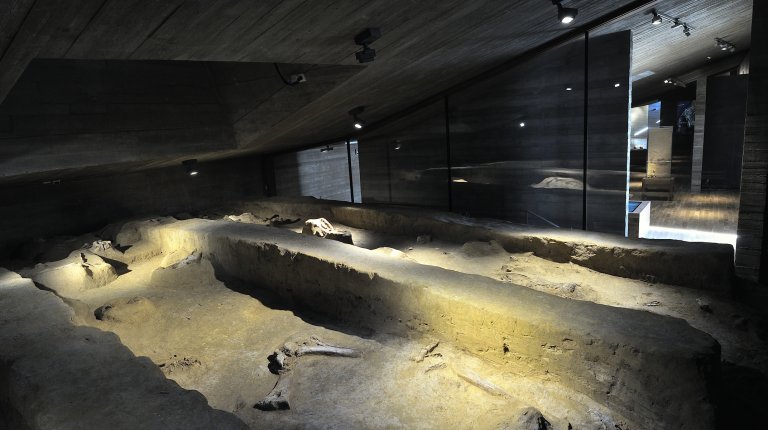
The bones of hunted mammoth were gradually amassed in piles beside the settlement in separate middens (→ exhibit 7.1). Sometimes they lay in adjacent waterlogged gulches, and at the Dolní Věstonice II site they were even piled beneath the surface of a pond that existed at the time. Dozens of individuals were found at the site; at Dolní Věstonice I they were found in their hundreds.
It has of course been debated whether these waste sites might have been a natural graveyard, a place where the animals came to die, and where humans hunting for bone and ivory turned up only later. Even though this interesting discussion has not been definitively settled, it is clear that life in the settlement was conducted simultaneously with the formation of these middens. It is likely, therefore, that the mammoth bones do indeed represent the massive remnants of hunted spoils, which for reasons of space and hygiene accumulated somewhat to the side of the main settlement areas. Storing parts of animal bodies beneath the water may also have been done to preserve food, especially in winter when the water froze solid.
The presence of bones in side gullies also confirms usage of an optimal hunting strategy, which made good logical use of the irregular terrain on the lower slopes of the Pálava. The aim was to separate off an individual animal, preferably a young one, from the main herd, which would have been following the course of river meadows. Once alone, the isolated mammoth would be driven into a ravine and up against a muddy slope of slush. The large creature would be forced to halt by the slippery waterlogged ground underfoot, while the rising sides of the ravine would give the hunter the advantage of height to take aim and strike the mammoth’s most vulnerable places – the belly or eye sockets. Certainly, there was no need to dig a “mammoth trap” – besides, in a landscape of frozen ground that would hardly have been possible.