Exponáty
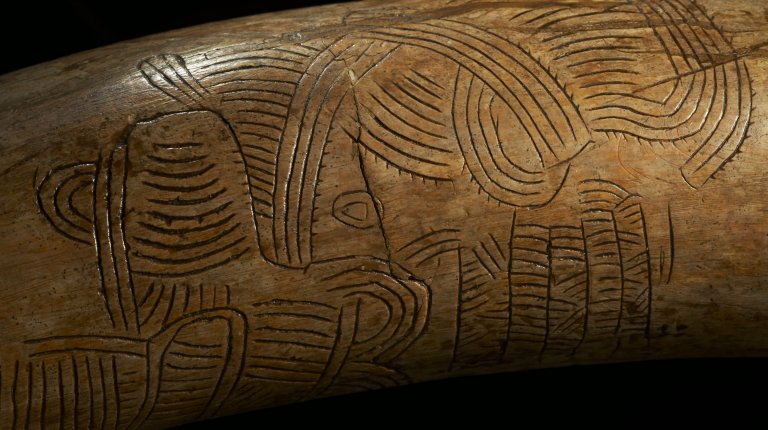
1.1 Complex geometric engraving on a mammoth tusk
This mammoth tusk, with its complex engraved geometric ornamentation, was discovered by Bohuslav Klíma in the 1960s and interpreted by him as a map of the Pavlov Hills.
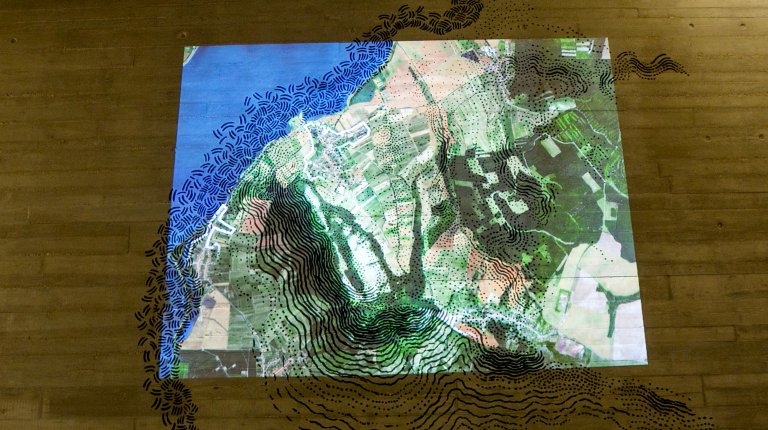
2.1 Place of world heritage
Exhibit type: video mapping - animation Within the context of the broader Central European space, the distribution of Gravettian settlements within the landscape is not accidental.…
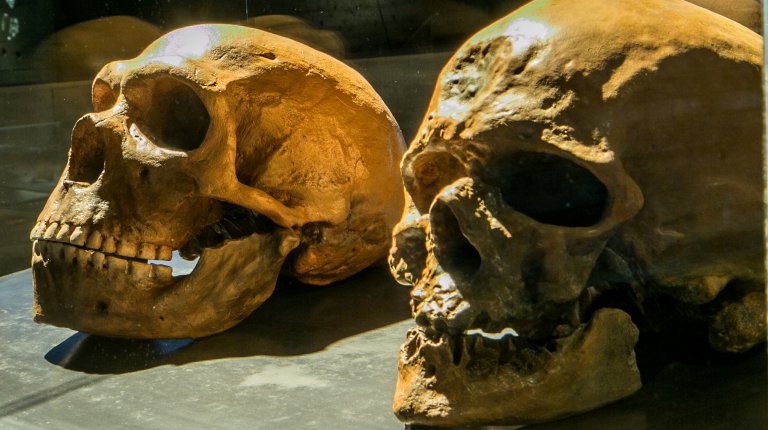
4.1 Comparison of Neanderthal and anatomically modern human skulls
Exhibit type: copy (plaster) 4.1-1 (left) – skull of the classic Neanderthal (completely reconstructed); 4.1-2 (right) – skull of an anatomically modern human(location Crô-Magnon,…
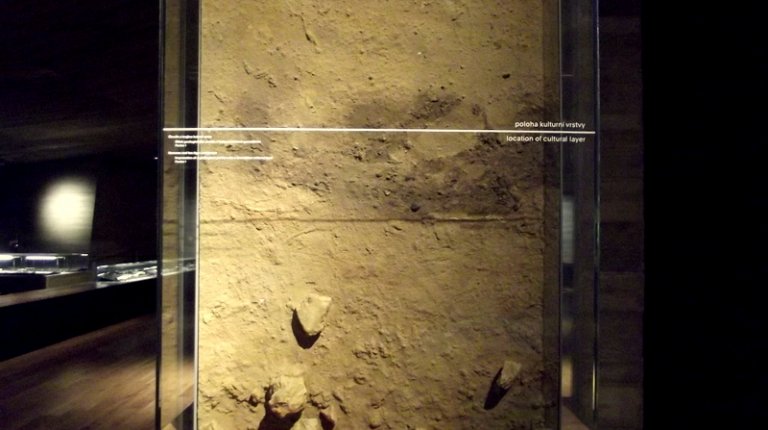
4.2 Imprint of the geological profile
The imprints of two geological profiles from the Pavlov I site show the position of the finds layer (cultural layer) of the Gravettian in the loess. Both profiles were taken as part of rescue…
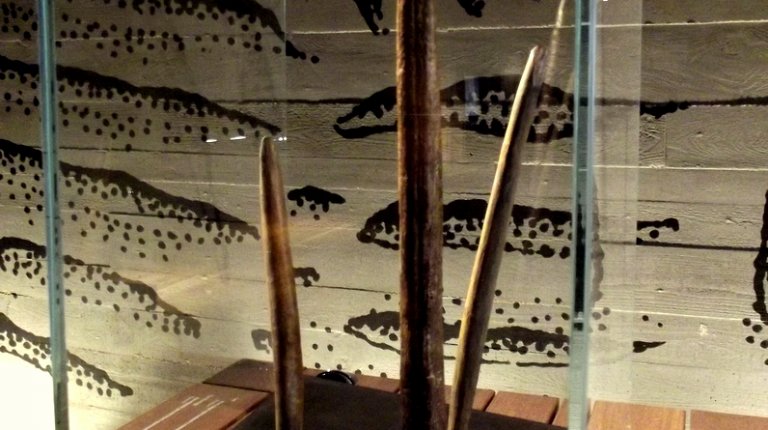
5.1 Spear points made from antler and mammoth tusk
In the Gravettian, the basic weapon for hunting large animals was a wooden spear with a hard point fashioned from mammoth tusk or ivory and ground to achieve a typically circular cross-section.
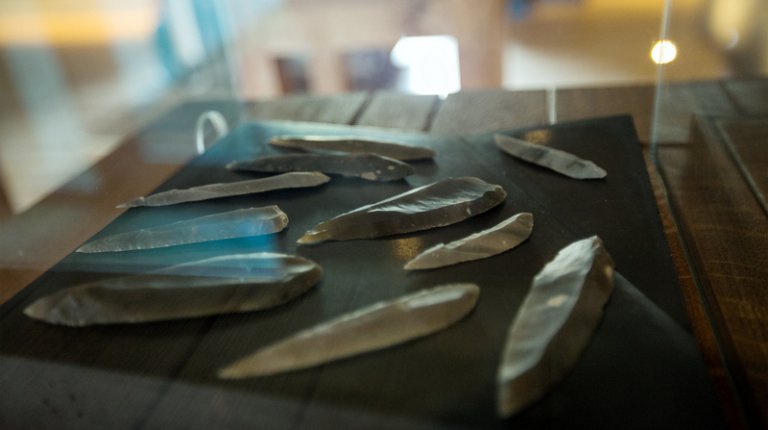
5.2 Gravettian points replica
Experimental replicas of typical stone points from the Gravettian, with one side completely blunted by abrupt retouching.