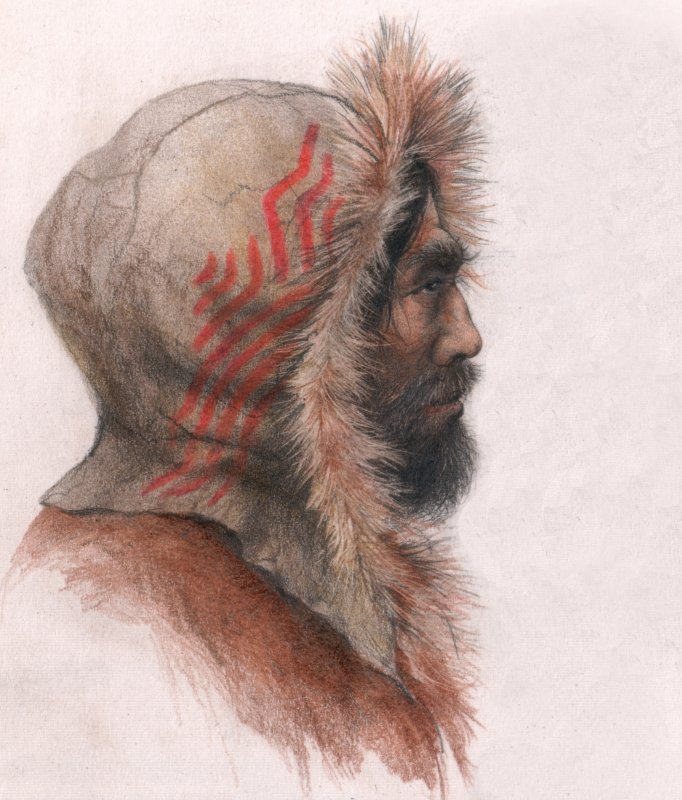
Today only one type of human population inhabits our planet – Homo sapiens. This successful population extended its area of settlement first into the tropical zone of South Asia and Australia, and then, about 50-30,000 BP, also penetrated in several waves into the cold and dry zone of Europe and Northern Asia. Their cultures – first Aurignacian and subsequently Gravettian – were not carried by these anatomically modern populations with them from tropical Africa, nor from the climatically mild Mediterranean. Rather, this culture expresses perfect adaptation to the cold conditions of the new environment into which they had penetrated. Nor can it be ruled out that helping to develop such culture were the indigenous but gradually dying out Neanderthals.
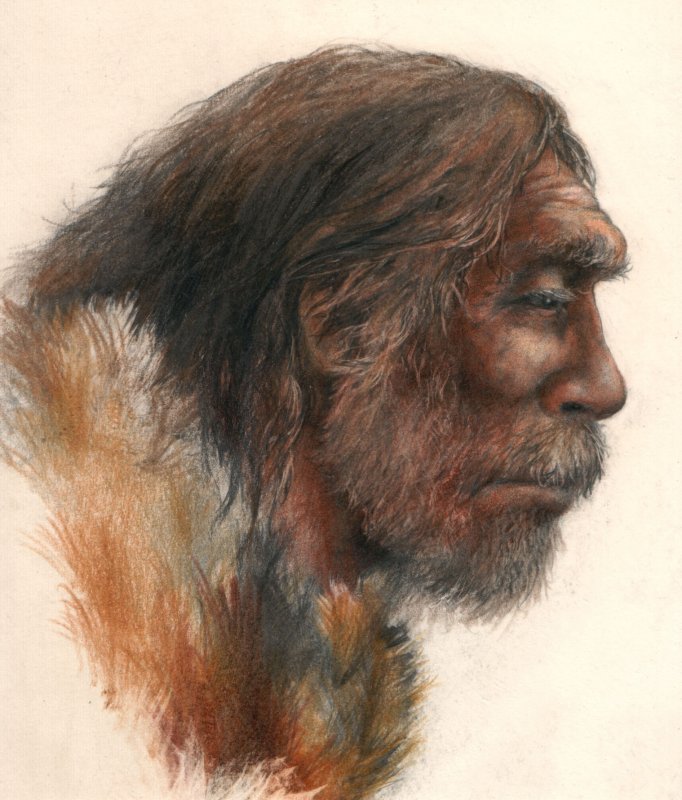
Neanderthals (Homo neanderthalensis) represent an evolutionary successful although today extinct developmental form of human. The precise reason for their dying out is not entirely clear, although the causes were undoubtedly many - for example a lesser ability to compete against modern humans, and above all the fact that they were unable to sufficiently culturally and economically adapt to changed environmental conditions in the last phase of the Ice Age.
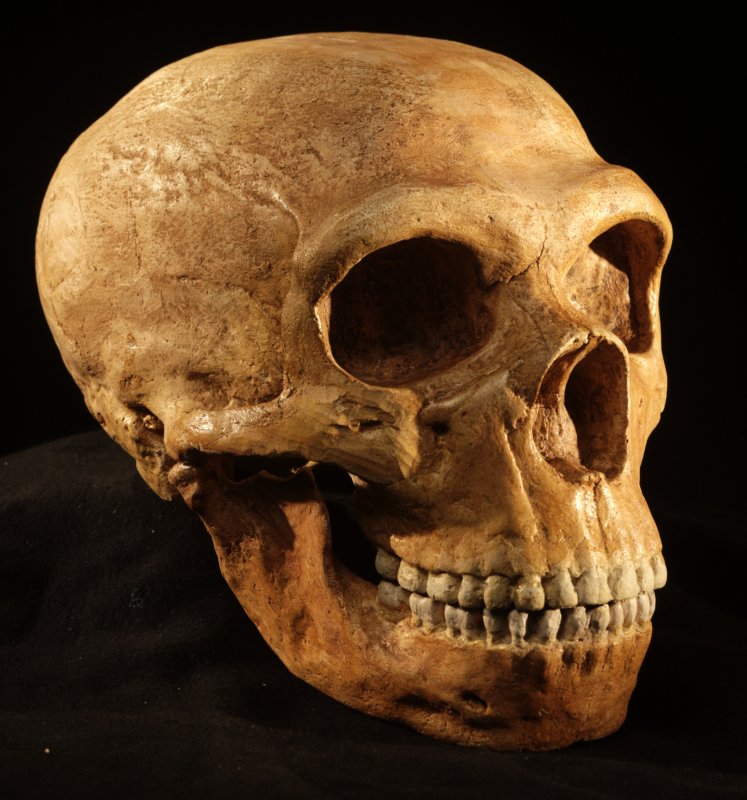
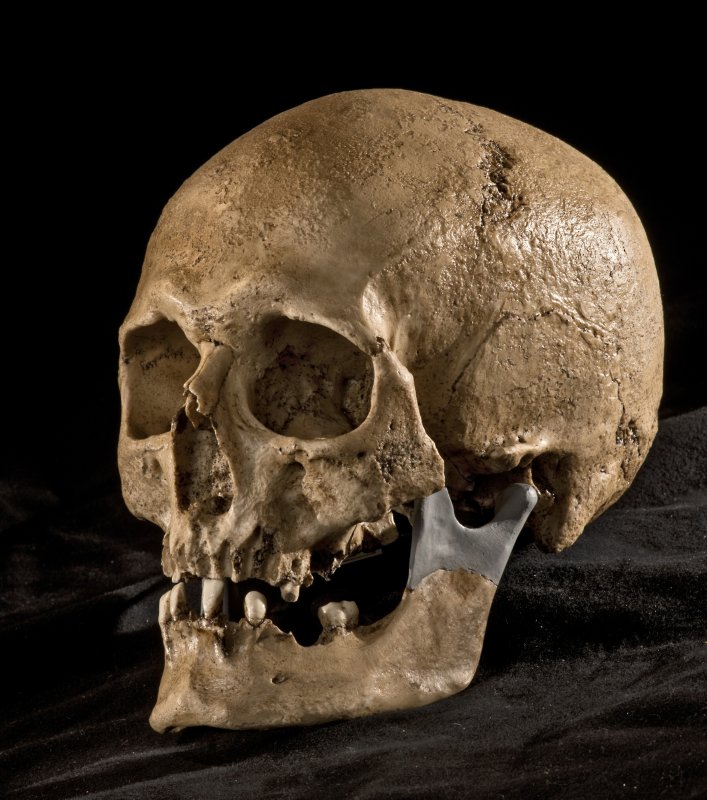
Comparing their skeleton to that of anatomically modern humans shows us that Neanderthals had a smaller (males averaged 160-165 cm, females 150-155 cm, in height) more muscular and robust figure, with shorter lower limbs and forearms. The skull was more elongated: it had a lower arch with a markedly more protuberant face and a characteristically prominent brow ridge. The skeleton of an anatomically modern human is taller and more graceful (male about 180 cm and female about 160 cm). The skull is short and high, with no prominent eyebrow ridge on the frontal bone. The cranial capacity did not essentially increase.