Exhibit type: original
Archaeological site: Pavlov I (Pavlov near Dolní Věstonice, Moravia)
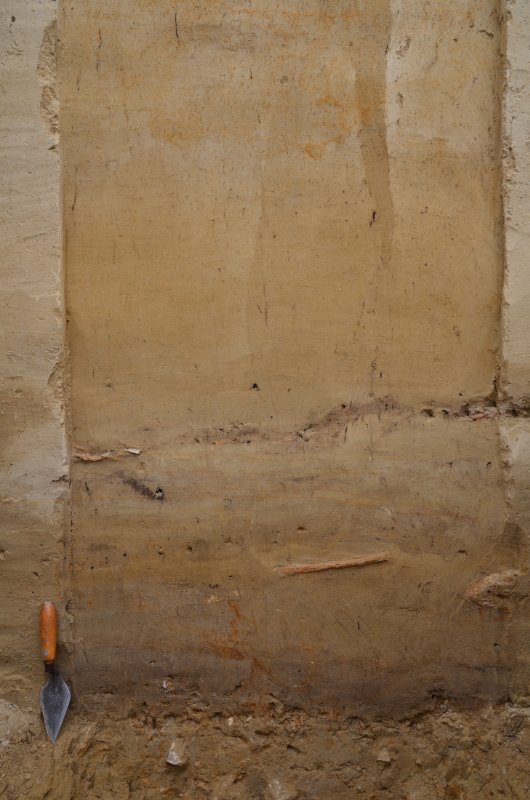
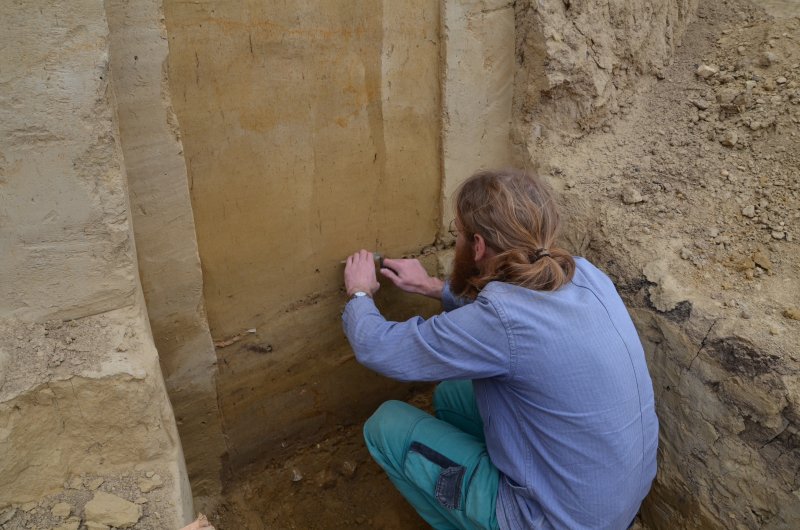
The upper part of the profile consists of the fine-grained light and chalky loess of the Last Glacial Maximum (last ice age), with a varied geochemical composition and structure, containing calcareous concretions and bands of precipitated iron, which have been partially deformed through frost processes. At its base we find the archaeological layers of the Gravettian with places containing charcoal, bones and artefacts, creating here a relatively compact, dark layer of varying thickness. Samples taken of the carbonized wood date the layer to the period of 25-30,000 years BP, which corresponds to the Middle and Lower Gravettian.In the subsoil of the loess has developed a more or less continuous brownish grey interpleniglacial soil with charcoal, beneath which runs a band of heavy, sharp-edged detritus composed of Jurassic limestone. The lower part of the profile is made up of a rich layer of Neogene clay sediments, in places mixed with limestone detritus and additionally affected by cryogenic deformation.
All Gravettian settlements, including these beneath the Pavlov Hills, are generally found under various thick layers of loess. This characteristic ice age sediment developed as a result of the gradual and long-term deposition of fine, dust-like material, carried from the regions at the foot of the continental and northern ice sheets and from surface erosion of the desert-like low hills for miles around. In the warmer and wetter interstadials the creation of loess was invariably suspended and soils would develop on the surface.